


BY: Jenny Ahn, Michelle Cera
EDITOR: Vikas Kumar
Hunterbrook Media’s investment affiliate, Hunterbrook Capital, does not have any positions related to this article at the time of publication. Positions may change at any time. Full disclosures on our website.
Ethos Technologies ($LIFE) is one of the hot stories in insurtech. The company’s shares have more than doubled since its January IPO. Ethos’ pitch to investors: Ethos is “democratizing” life insurance through an AI-based “100% digital application and underwriting process” that makes getting life insurance a breeze.
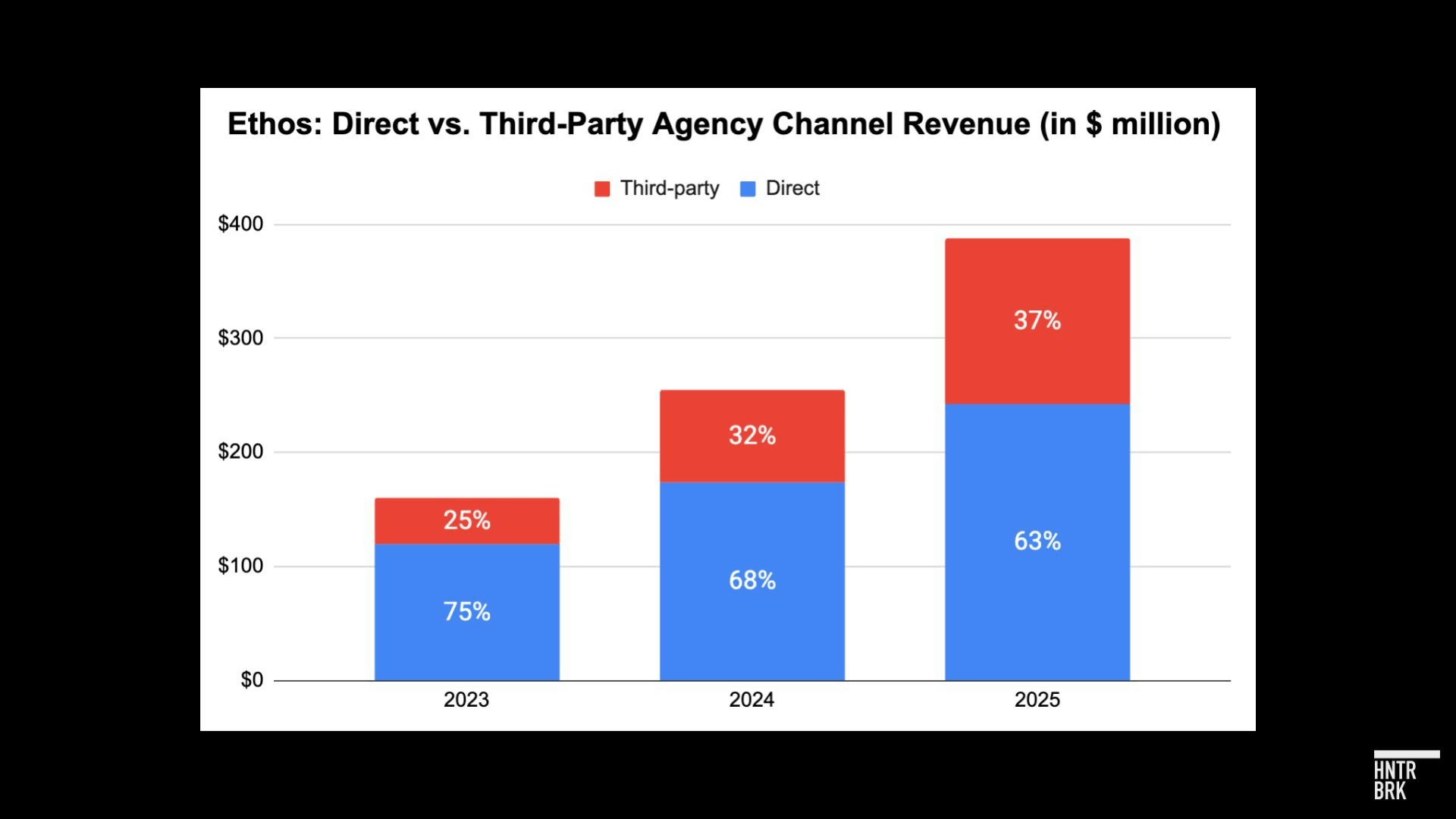
Ethos isn’t an insurance carrier. It earns commissions selling policies on behalf of carriers, both directly to consumers through its digital platform and through third-party agents. And the third-party distribution channel’s share of the company’s overall revenue has risen every year since 2023. In the most recent quarter, the third-party channel accounted for approximately 39% of the company’s revenue, according to its quarterly filing.1
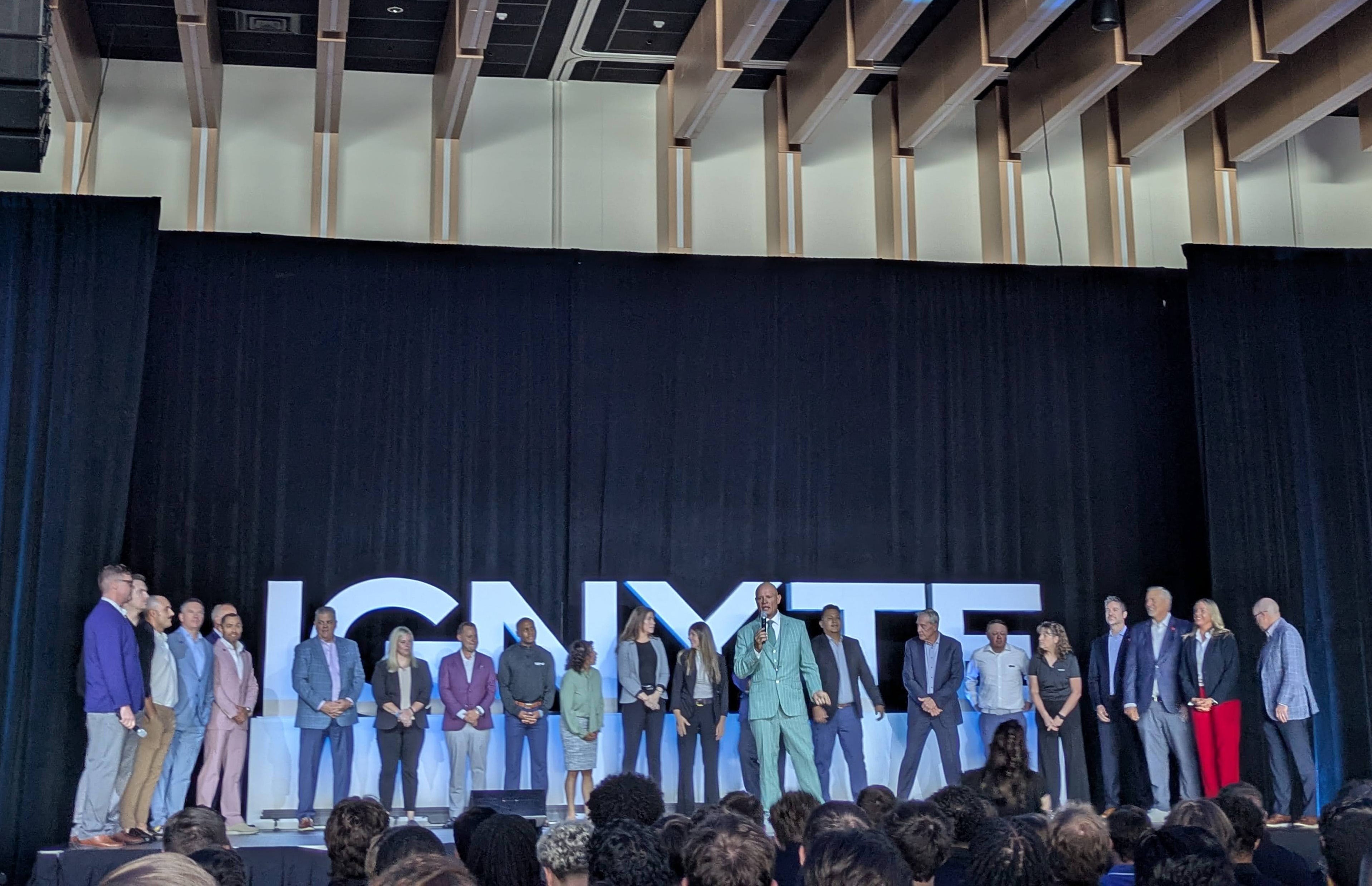
On September 10, a Hunterbrook Media journalist attended the Ignyte Fall 2026 Sales Conference in Fort Lauderdale, a training conference held by Family First Life (FFL).
FFL is a multilevel marketing company that sells life insurance policies for Ethos and other insurance carriers, mostly the old-fashioned way: through phone calls. At the conference, FFL President Shawn Meaike lined his insurance partners up onstage during a session called the “carrier panel,” from what he called the “weakest” to the “strongest,” with three Ethos representatives at the weak end.
Then he made them apologize.
“Why don’t you just start by saying you’re sorry?” Meaike said, cutting off Ethos strategic account manager Dylan Cummings, who had opened his speech by calling the past few months “among the most unique summers” of his insurance career.
“Seriously, why don’t you start by saying, ‘We have a carrier we do business with that shut down. We can’t get — Guys, I’m mother freaking sorry,’” Meaike continued.
“I’m more than a little sorry about the experience that you guys have had with Ethos this summer,” Cummings said.
FFL is not a minor partner for Ethos. A Hunterbrook analysis of what Ethos calls “microsites” — personalized sites given to its third-party agents — suggests that FFL has the most agents onboarded with Ethos of any third-party distributor it works with. Based on the publicly available data, about 42% of an estimated 178,000 agents with active Ethos microsites are affiliated with FFL, nearly twice the number of those estimated for the next-largest partner agency.
The top three agencies by our head count make up about 70% of the total agents with microsites, which is consistent with Ethos’s revenue breakdown: In its 2025 10-K, Ethos said 31% of total revenue came from just “three of our most significant agency relationships.” That means roughly 84% of the channel comes from three distributors.
So why did Ethos’s biggest distributor rank it last?
“I can’t get the carrier. The website’s shut down. And they won’t do anything. And they just have this notation on there that says that they’re not going to get back to me. What do I do?” Meaike said onstage, mimicking the complaints from FFL agents.
Meaike was referring to a system outage at TruStage, one of Ethos’ three largest carriers. TruStage announced it had suffered a “particularly broad attack on our network and systems” on July 11, requiring the company to take its network offline, according to the carrier’s website.
TruStage is Ethos’ “biggest carrier,” and on the brokerage side, “it’s by far our base product,” Cummings later told a group of FFL agents and the Hunterbrook reporter on the sidelines of the conference.
In its 10-Q for the second quarter of 2026, the company disclosed that 88% of its revenue came from three carriers, which included TruStage.
Beyond the strained relationship with one of its biggest distributors, Ethos likely took a financial hit from the TruStage outage, in three ways.
The first is the lost renewal commission on the policy lapses. As a result of the outage, TruStage “did not draft a premium” on a “bunch of” existing policies, Cummings claimed, leading to “a lot of policy lapses.” Cummings said Ethos saw 15% more lapses than “we normally would.”
Ethos recognizes future renewal commissions based on an estimated persistency rate, which predicts how many policies will stay in force. If policies lapsed faster than that rate due to the outage, as Cummings’s account suggests, Ethos may have to reverse previously booked revenue.
The second is the cost of forgiving chargebacks. When third-party agents write a new policy, Ethos advances the commission it expects to earn from that policy, typically for six to nine months, according to Ethos agents at the conference. If the policy lapses before then, Ethos claws back the commission from the agent, according to its 2Q26 10-Q filing.
Because TruStage couldn’t collect monthly payments from its policyholders, policies lapsed, triggering chargebacks to agents who had written policies within the advance window. Ethos agreed to forgive 50% of the chargebacks, Cummings told a small group at the event. Ethos has not responded to Hunterbrook’s request to confirm this or explain how, or whether, that cost is being shared with TruStage.
The third is potential lost sales, in both the direct and third-party channels, although when questioned about that, Cummings denied that there was any meaningful interruption. He characterized the outage as “actually a good thing”, because it would allow Ethos to get more involved in, and improve, certain aspects of TruStage’s new business processing. TruStage did not respond to Hunterbrook’s request to confirm this point.
But two months after the cyberattack, things still appeared shaky. After the panel, a crowd of FFL agents gathered around the Ethos reps, seeking answers about their chargebacks and asking when TruStage’s system would be fully back online.
TruStage’s own recovery page doesn’t give a date. As of September 11, it described policy management and payment servicing as “partially available,” with restoration still underway.
Meaike also appeared unconvinced by the Ethos representatives’ statements on stage. “If you want to bet me that they move up — and I love to gamble — they have no shot to move up. And I mean none,” he said, referring to the stage lineup.
“If the people that were servicing you and the clients cared more, the problem will be fixed, but it ain’t,” Meaike said.
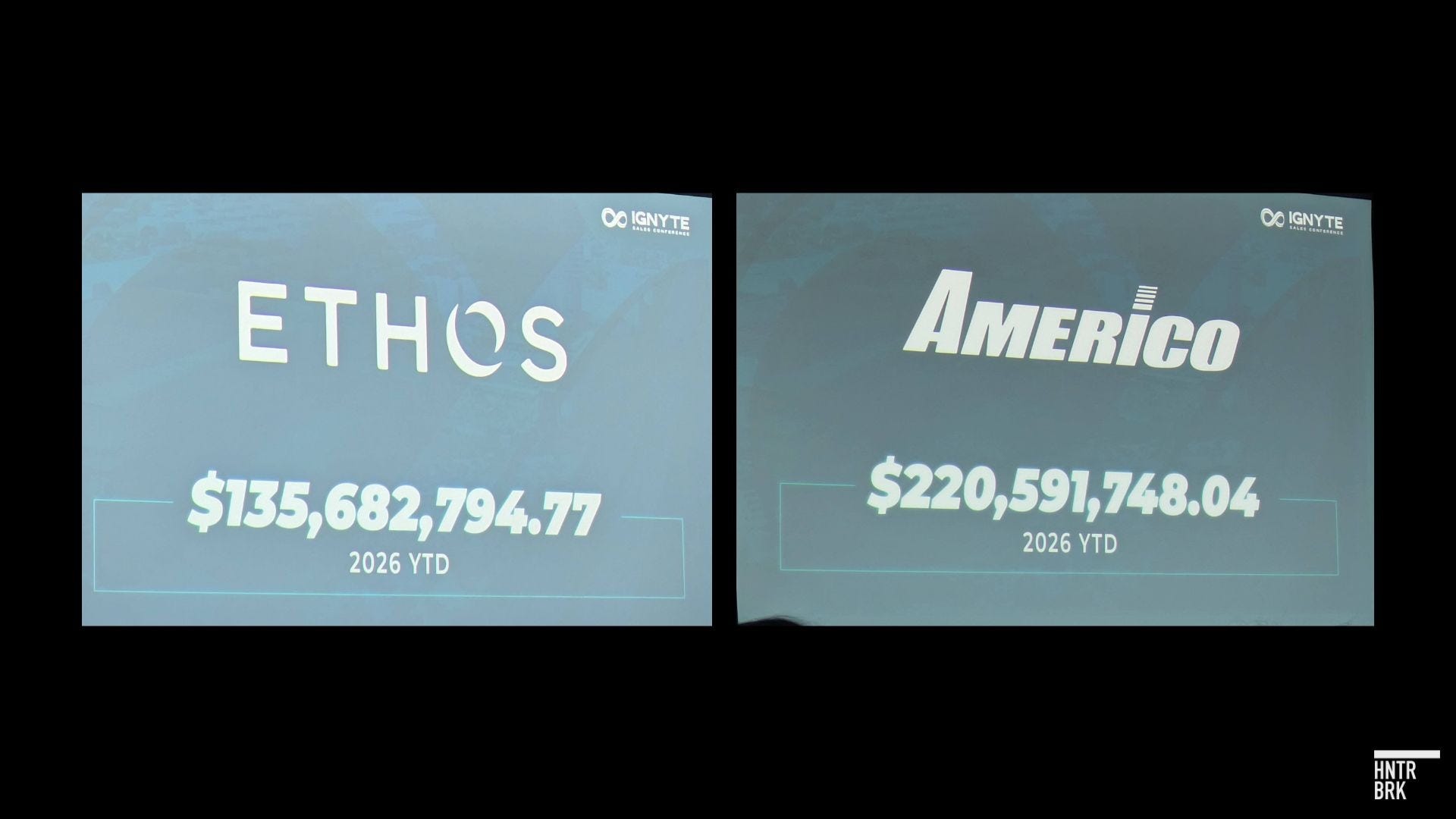
Whether Meaike’s onstage statements were theatrics or a genuine verdict on the relationship remains to be seen. After “betting” that Ethos had no shot at moving up, Meaike seemed to have softened his tone by the end of the panel: “If you believe it, Dylan, then I believe y’all.” FFL writes more policies for Ethos than for any other company besides Americo, according to Cummings.
But Ethos’s days as a leading technology-forward partner for FFL may be numbered. Meaike highlighted another partner, Instabrain, as a new favorite, saying he brought it on precisely because it can do everything Ethos does. Instabrain advertises an AI-based insurance sales platform promising “No exam. No waiting” and “a real decision in minutes,” a pitch nearly identical to Ethos’s.
TruStage told Hunterbrook that it continues “to work collaboratively to support customers and facilitate business operations.” Ethos and Family First Life did not respond to requests for comment. InstaBrain declined to comment.
AUTHORS
Jenny Ahn joined Hunterbrook after serving many years as a senior analyst in the US government. She is a seasoned geopolitical expert with a particular focus on the Asia-Pacific and has diverse overseas experience. She has an M.A. in International Affairs from Yale and a B.S. in International Relations from Stanford. Jenny is based in Virginia.
Michelle Cera trained as a sociologist specializing in digital ethnography and pedagogy. She completed her PhD in Sociology at New York University, building on her Bachelor of Arts degree with Highest Honors from the University of California, Berkeley. She has also served as a Workshop Coordinator at NYU’s Anthropology and Sociology Departments, fostering interdisciplinary collaboration and innovative research methodologies.
EDITOR
Vikas Kumar joined Hunterbrook from The Capitol Forum, where he led the corporate investigations team for a decade as a senior editor. He was previously an attorney at Gordon Feinblatt, a trial attorney for the Department of Justice, and a law clerk for a federal judge. He has a J.D. from University of Virginia School of Law and a bachelor’s from Emory University. Vikas is based in Maryland.
DISCLOSURES
© 2026 Hunterbrook Media LLC. All rights reserved. Use of this website is strictly governed by our Terms of Use. The content herein is furnished on an “AS IS” basis without any form of express or implied warranty. For information regarding our privacy practices, please refer to our Privacy Policy.
Hunterbrook Media LLC (”Hunterbrook Media”) is an investigative news organization. Hunterbrook Media is affiliated with Hunterbrook Capital LP (”Hunterbrook Capital”), an exempt reporting adviser with the U.S. Securities and Exchange Commission that serves as investment adviser to one or more investment funds. Hunterbrook Media and Hunterbrook Capital are legally separate entities under common control. Hunterbrook Capital’s investment activities are one source of funding for Hunterbrook Media’s journalistic operations. Hunterbrook Capital may hold long positions, short positions, positions through derivative instruments including options and swaps, or no position in any security covered or mentioned on this website. Consistent with applicable policies and procedures, Hunterbrook Capital may establish, modify, or close positions in covered securities before or after the publication of any Hunterbrook Media article. Following publication of any article, Hunterbrook Capital will continue transacting in covered securities for an indefinite period and may be long, short, or flat at any time thereafter, regardless of any position described at publication. Hunterbrook Media has no obligation to update any article or disclosure to reflect subsequent changes in Hunterbrook Capital’s positions.
Nothing on this website constitutes investment advice, a recommendation to buy, hold, or sell any security, or a solicitation to purchase or sell any securities. No securities shall be offered or sold in any jurisdiction where such activities would be contrary to applicable securities laws. Hunterbrook Media is not a registered investment adviser in the United States or any other jurisdiction. Nothing herein should be construed as investment advice or a recommendation of any kind. This information should not be relied upon as a substitute for independent research or professional financial, legal, or tax advice.
This website may feature forward-looking statements reflecting Hunterbrook Media’s current views. Such statements, identifiable by terms including but not limited to “anticipate,” “believe,” “estimate,” “expect,” “intend,” “may,” “plan,” “predict,” “should,” and “will,” are inherently speculative and subject to risks and uncertainties. Actual results or outcomes may substantially deviate from those projected. Hunterbrook Media expressly disclaims any obligation to update or revise any forward-looking statements, regardless of subsequent developments or new information.
The information presented is current as of the date indicated. No representation regarding the completeness or timeliness of this information is made. Some information is sourced from third parties and, while believed to be reliable, has not been independently verified, and its accuracy or completeness is not guaranteed. Hunterbrook Media is not affiliated with any sites linked to this website. Investment in securities and other financial instruments involves significant risk, including the potential loss of principal. Users are advised to conduct their own due diligence and consult professional advisors before engaging in any investment activity. Use of Hunterbrook Media’s content is entirely at the user’s risk. Users shall not use this site for any illegal or prohibited purposes and shall comply with all applicable local, state, national, and international laws and regulations.
Should any provision of these Terms of Use be adjudged invalid or unenforceable, the remaining provisions shall remain in full force and effect. Trademarks contained in links to third-party websites belong to their respective owners. Hunterbrook Media retains copyright on all text, content, graphics, and trademarks displayed on this site.
Quarter over quarter, direct-to-consumer revenue fell about 20% to $116.5 million from $146.0 million the prior quarter, while the agency channel jumped about 55% to $73.1 million from $47.1 million. Ethos has emphasized year-over-year growth, however, where both channels rose triple digits from the same quarter a year before.