


BY: Till Daldrup
EDITORS: Jim Impoco, Vikas Kumar
A contractor behind America’s most expensive transit project per capita has dumped lead-laced soil next to playgrounds and pickleball courts. The toxic dirt is being stockpiled in the middle of some of the city’s poorest, densest neighborhoods. Wipe sampling conducted by Hunterbrook shows contaminated dust from these soil piles may have drifted to nearby residential areas.
Hunterbrook Media’s investment affiliate, Hunterbrook Capital, does not have any positions related to this article at the time of publication. Positions may change at any time. Full disclosures on our website.
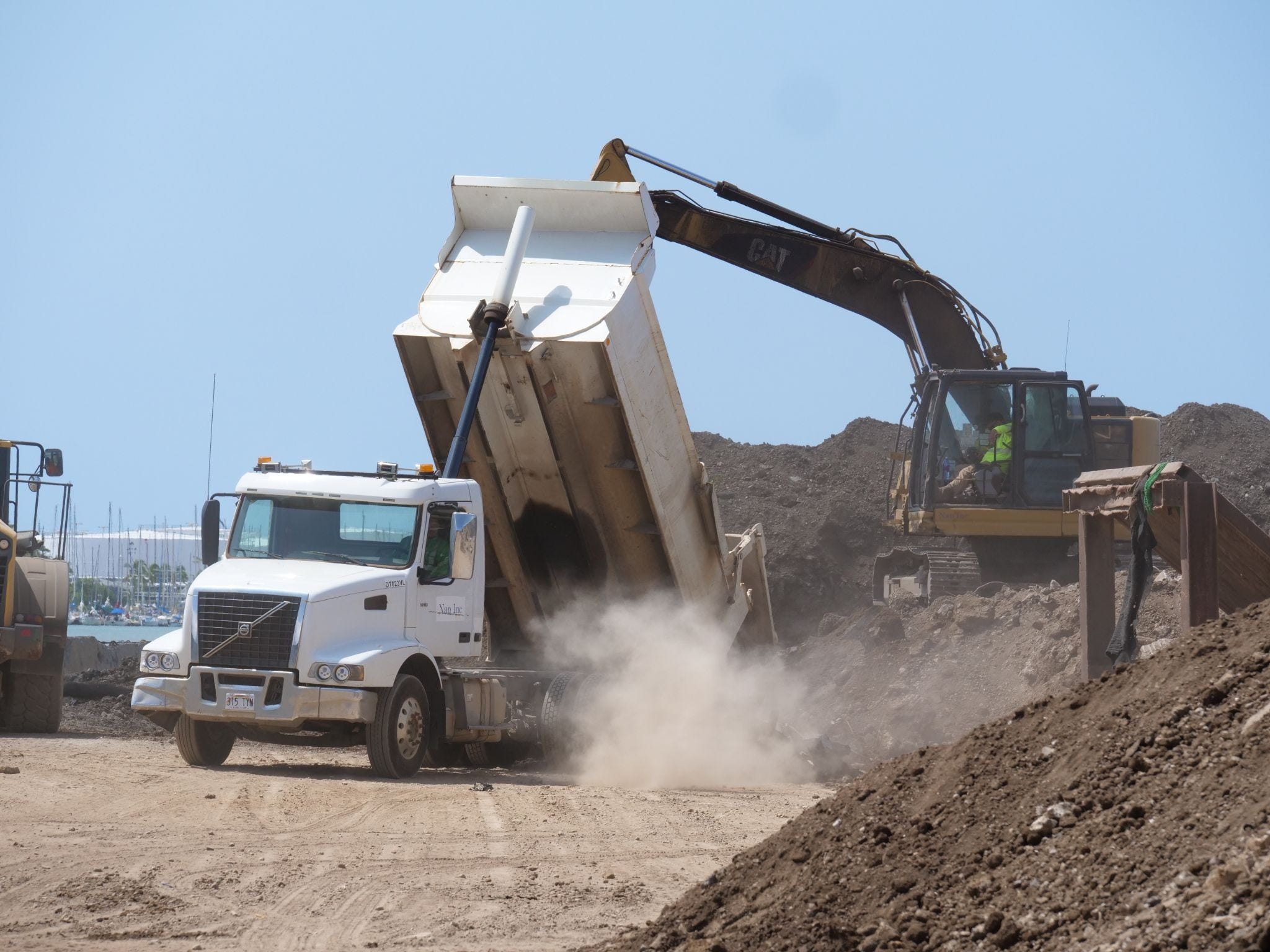
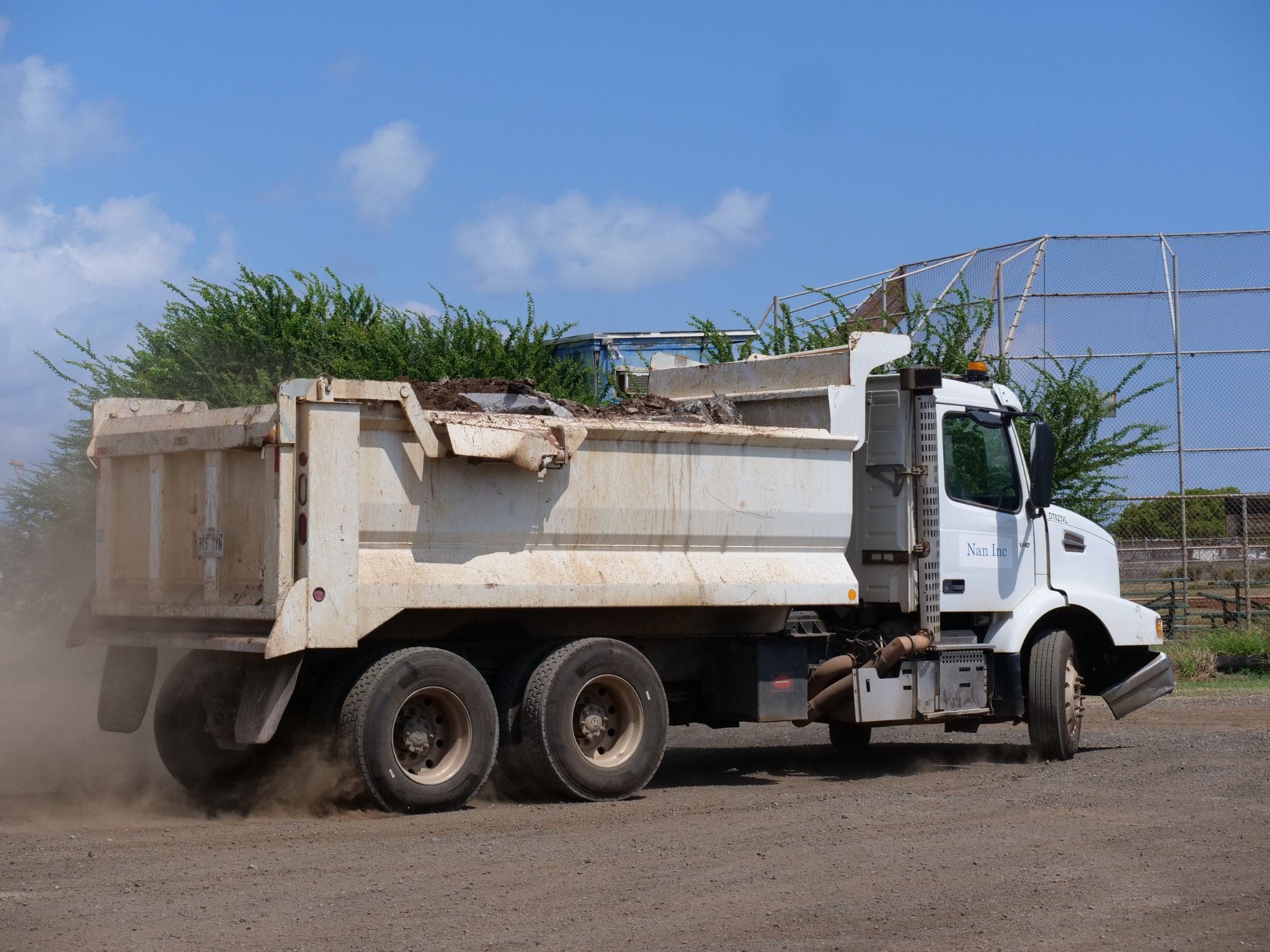
Dust swirls up from the ground as a white dump truck releases its cargo, a mix of dirt and rubble, onto the ground. The plume does not dissipate quickly. It lingers in the air, giving the dump site a yellowish hue, like a sepia Instagram filter.
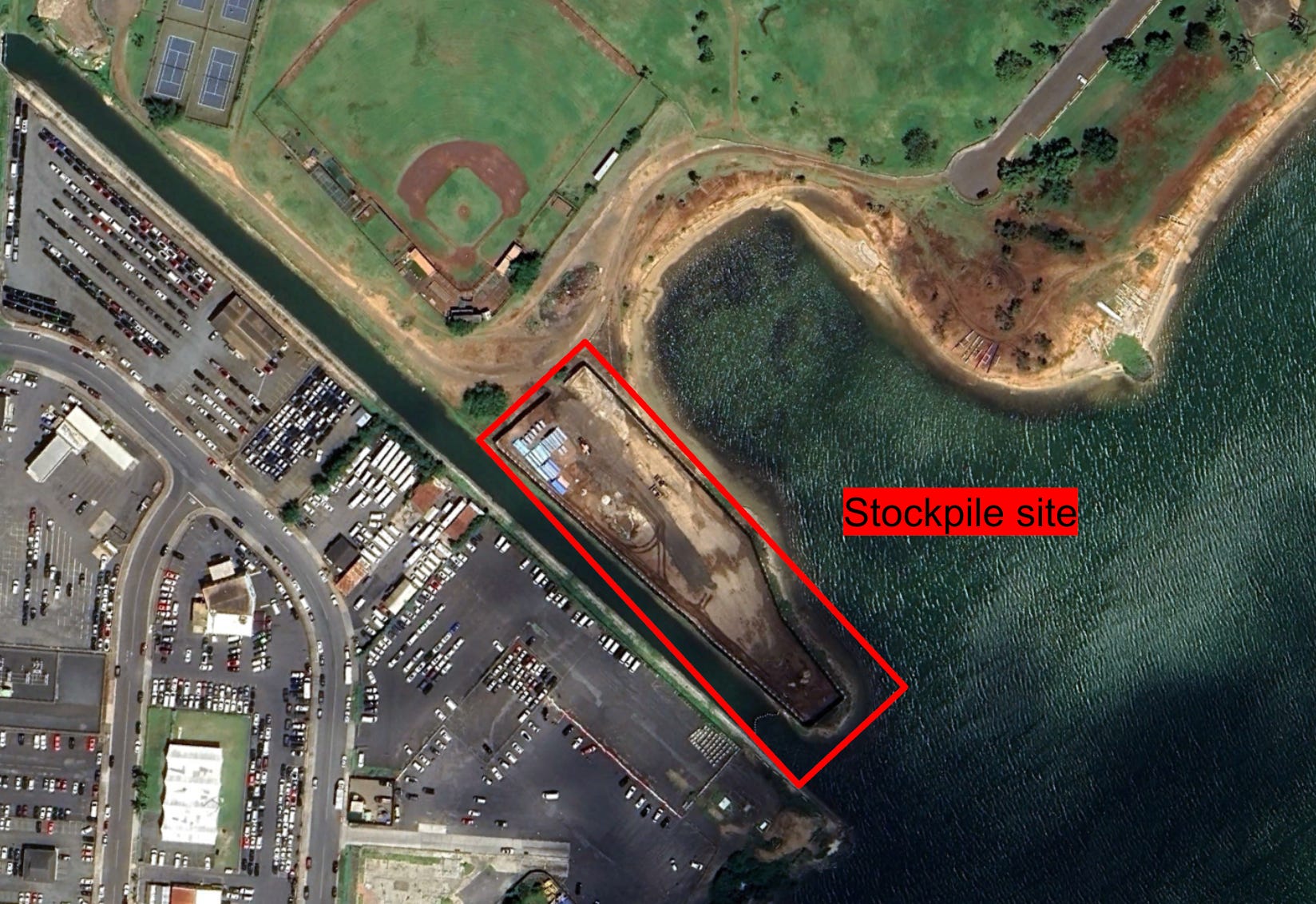
The truck belongs to Nan, Inc., a Hawaii-based construction company and a main contractor on Honolulu’s Skyline, the first fully driverless urban rail transit system in the U.S. and one of the most expensive mass-transit megaprojects per capita worldwide. This dumping site is one of several stockpiling points where Nan stores the soil it digs up during construction. It sits at the southern tip of Ke’ehi Lagoon Beach Park, a public green space with a baseball field, picnic benches and a playground barely four miles from downtown Honolulu. Satellite images reviewed by Hunterbrook show that soil has been stored here since at least January 2024.
This is the dirty secret beneath Hawaii’s signature infrastructure achievement. The push to complete Skyline has unsealed a century’s worth of buried industrial toxins, turning working-class recreational hubs and residential streets into open-air dumping grounds. While city officials champion a green transit future, state regulators have tolerated persistent reporting lapses, missed oversight deadlines, and unlined, uncovered dirt piles.
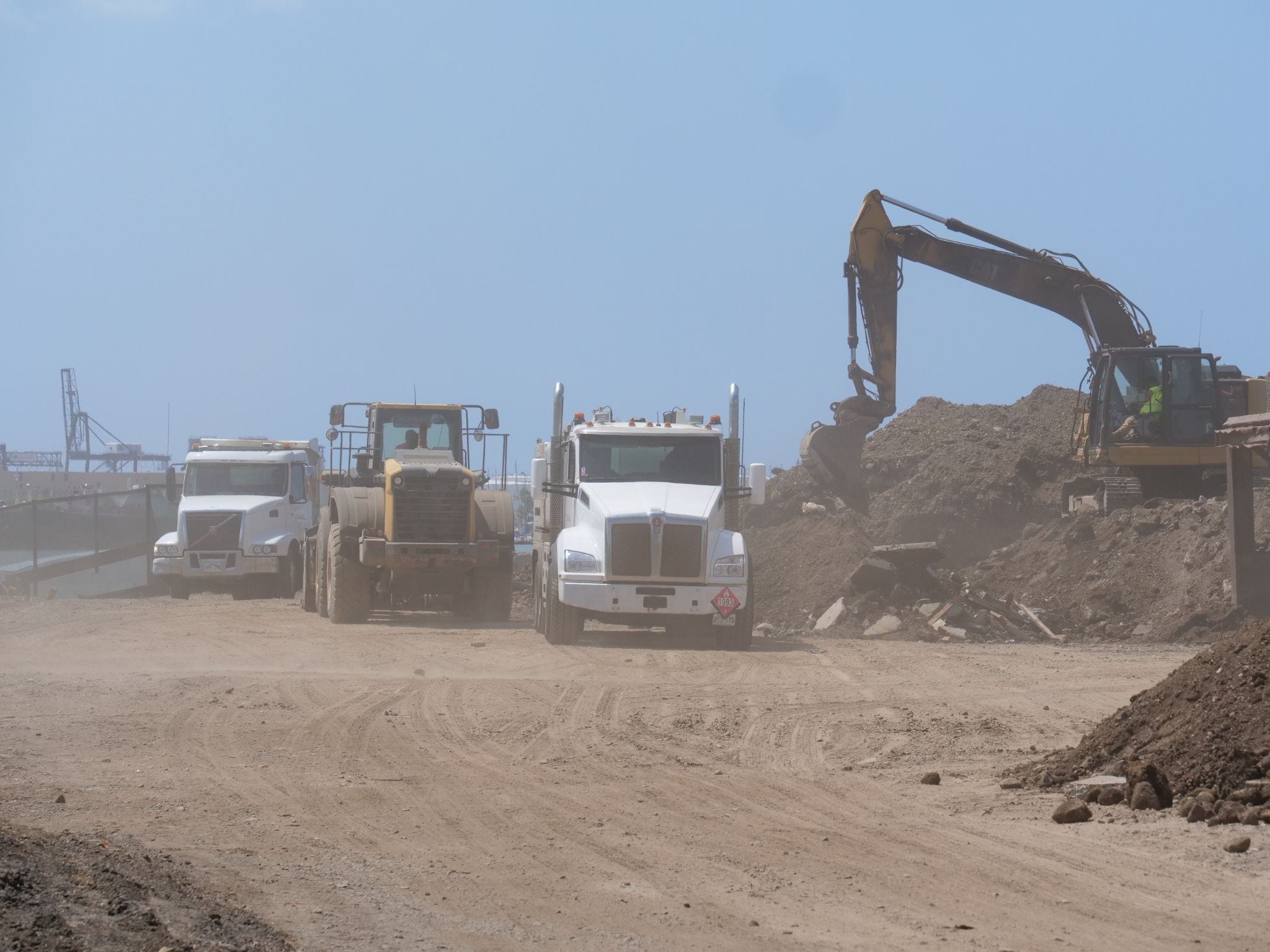
When Hunterbrook visited this site in June, people played pickleball on a nearby court, while a frontloader and an excavator piled up the dirt, some of the uncovered heaps more than 10 feet tall.
The soil here looks like any other, but some of these piles may contain high levels of hazardous contaminants, including lead, arsenic and barium, according to incident reports on Hawaii’s Hazard Evaluation & Emergency Response (HEER) Office’s spill database.
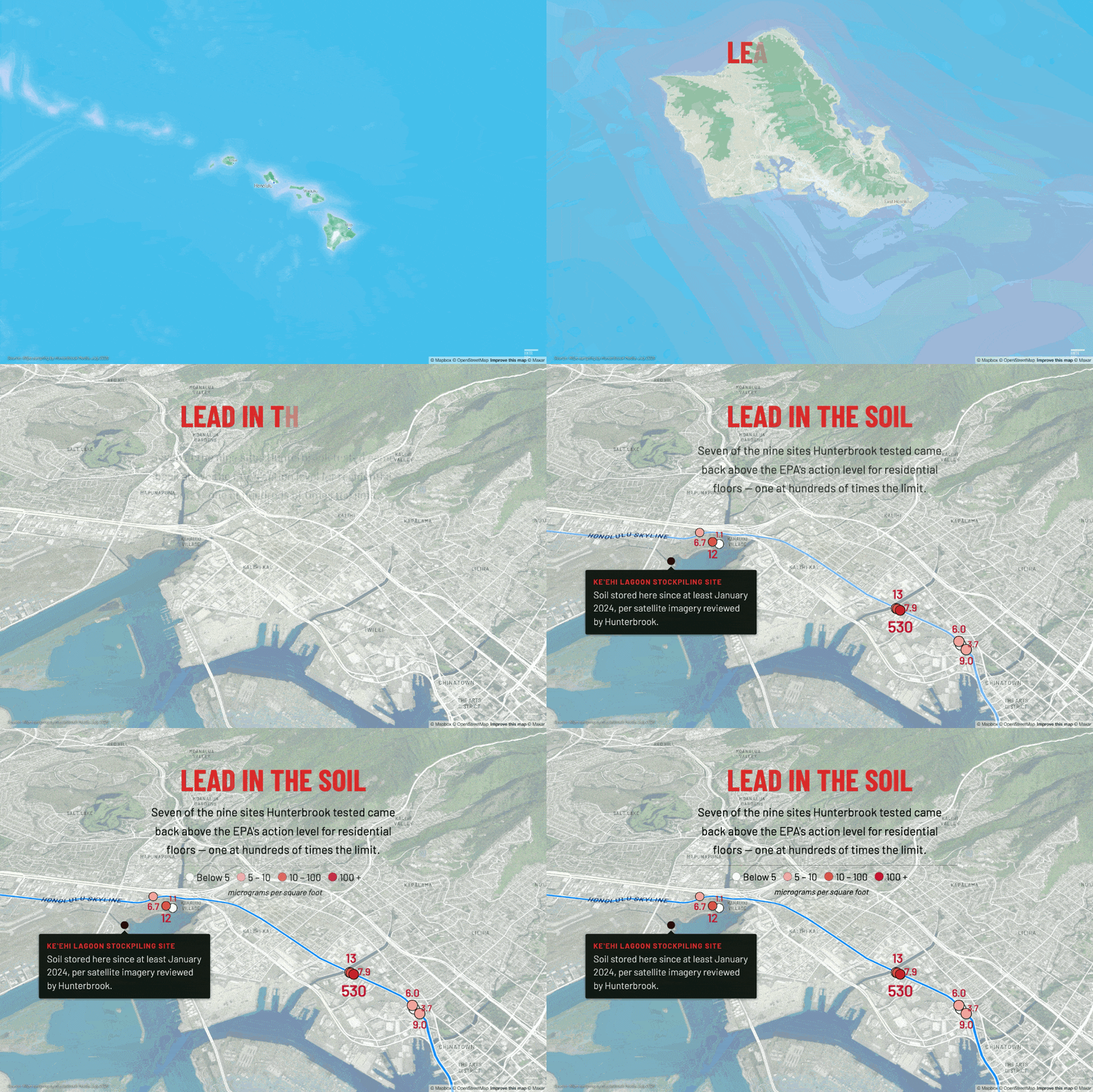
Dust particles from these toxic soil piles may be dispersing to nearby residential and recreational areas, where people might come in contact with them, environmental testing conducted by Hunterbrook shows: Dust wipe samples collected near two stockpiling sites and one construction site in July found lead levels above the EPA’s safety limit for residential floors at seven of nine locations. One sample measured 530 micrograms per square foot, more than 100 times that benchmark.
Lead accumulates in bones and soft tissue, with skeletal stores persisting for decades. In children, even low levels are associated with reduced IQ, developmental delays, and learning and behavioral problems. The CDC and WHO state there is no known safe blood lead level for children, and the neurological damage is largely irreversible. In adults, chronic exposure is linked to hypertension, cardiovascular disease, kidney damage, peripheral neuropathy, cognitive decline, reduced fertility, and increased miscarriage risk.
When asked about the stockpiling sites and elevated lead levels near them, the Honolulu Authority for Rapid Transportation (HART) said that soil exceeding environmental action levels “has been encountered in portions of the project corridor.”
“Contaminated soil was managed at the Keʻehi Lagoon in a secured yard under [Hawaii State Department of Health] oversight. The material was stockpiled, characterized, and managed, with ongoing coordination between HART and HDOH regarding its handling, disposition, and reporting requirements,” a HART representative told Hunterbrook in a written statement.
Nan Inc., the Hawaii State Department of Health and the City and County of Honolulu did not respond to a request for comment.
THE GHOSTS OF HONOLULU’S PAST
City and state officials knew early on that they were digging into a buried ecological minefield when they mapped Skyline’s route along the industrial waterfront.
“If not managed safely, excavation of contaminated soils and redevelopment of contaminated properties can put construction workers, future property users and local communities at risk,” a page on HEER’s website reads. The office sits within the Hawaii State Department of Health.
The concern: The soil along the path of the new HART rail line is contaminated with various hazardous pollutants, including lead, arsenic and barium.
Two segments, leading from Kualaka‘i Parkway in the suburbs west of Honolulu to the Kalihi Transit Center east of the airport, are already open. The first section launched in 2023, and the second opened last year. The new extension, which cuts through dense neighborhoods along Dillingham Boulevard and Nimitz Highway in downtown Honolulu, is currently under construction and is supposed to start operating in 2031.
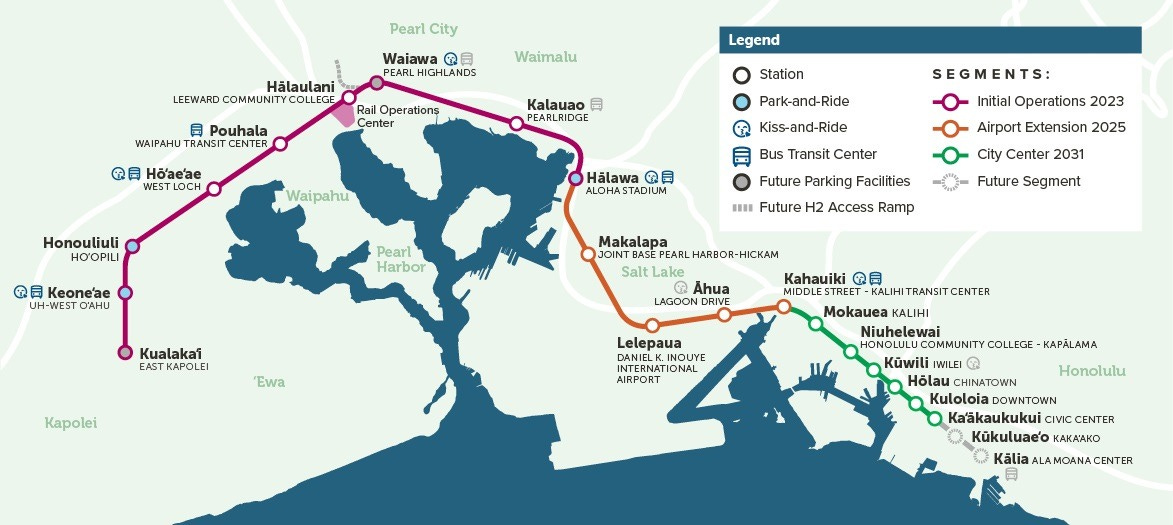
Hidden in the soil underneath this segment is a toxic cocktail, remnants of various historical industrial facilities in the heart of the city: a manufactured gas plant. A former Navy fuel drumming site and laundry facility. A network of former petroleum pipelines, some of them dating back to the early 1900s. Dredge spoils from harbor channels and debris from two Chinatown fires in 1886 and 1900 were also used to raise the ground level in this area.
Regulators were well aware that decades of industrial soot and toxic ash could be brought back to the surface the moment heavy excavation began.
“The HEER Office has been working with the Honolulu Authority for Rapid Transportation (HART) to help them identify properties with contamination or potential contamination within or near the 20-mile rail line and proactively manage all encountered and/or generated media,” the HEER website says.
Entries on HEER’s spill database show that construction crews started encountering highly contaminated soil during excavation work as early as January 2023. A Hunterbrook review of the database identified at least 26 incident reports since then that show that stockpiled soil excavated for rail line construction had high levels of environmental pollutants like lead, arsenic or petroleum.
Lead levels were as high as 2,900 milligrams per kilogram of soil. That’s more than 14 times Hawaii’s safety threshold for residential soil. At that level, the trace amounts of soil and dust a child between the ages of two and six typically swallows in a day of normal play (60 to 200 milligrams, according to the EPA’s estimates) would contain more than 70 times the FDA’s maximum daily lead intake level for children.
HART’s 2014 Programmatic Environmental Hazard Evaluation and Environmental Hazard Management Plan for the transit project gives a detailed overview of how the toxic soil is supposed to be handled.
Due to the historical industrial activities in the area, “surficial soils should be considered as potentially contaminated,” the document says. HEER must be notified 30 days before work in suspect areas, and immediately if unexpected contamination is found. All excavated soil is tracked to its final location and reported.
Environmental personnel must screen excavated dirt visually, by odor, and with quick field tests. If the soil is deemed contaminated, it’s supposed to be separated from clean soil, labeled, placed on liners in piles, covered with anchored waterproof sheeting and inspected daily.
Incident reports in HEER’s spill database show a weekslong delay between soil being sampled and elevated contaminant levels being flagged to regulators in at least four cases. In one incident, stockpiles were sampled in June and July 2025, but the lead results weren’t reported to the Department of Health until December 8, 2025, a roughly five-month gap.
“In some instances, reports were submitted weeks or months after samples were collected. Sample collection is only one step in the evaluation process, and laboratory analysis, data review, and coordination regarding soil management and disposal may be required before reporting is completed,” a HART spokesperson told Hunterbrook.
When Hunterbrook visited the stockpiling site at Ke’ehi Lagoon Beach Park, a dump truck transported an uncovered load of what appeared to be construction debris. It’s unclear whether the dirt on the truck had been tested for potential contamination. The soil piles at the park stockpiling site were also uncovered.
According to several spill database reports, contaminated soil piles are sent to a landfill outside of Honolulu for final disposal.
THE POSSIBLE HEALTH IMPACTS
Hunterbrook conducted wipe sampling near two soil stockpiling sites and one rail line construction area in Honolulu in July. Seven out of nine samples came back with lead levels above an EPA safety limit for residential floors. Dust-lead action levels “are used to determine both when EPA recommends abatement work and when an abatement can be considered complete,” according to the agency.
The EPA also has a separate standard for a “dust-lead hazard,” which is defined as “surface dust in a residential dwelling or child-occupied facility that contains a mass-per-area concentration of any reportable level of lead for floors or for interior window sills based on wipe samples.” That means any lead level that can be detected by a certified lab is considered hazardous by the agency.
While these safety standards were set for indoor areas, Hunterbrook’s test results for locations near stockpiling sites are still concerning, experts said.
“The same kind of health standard can easily apply to outdoor samples,” Gabriel Filippelli, Chancellor’s Professor of Earth Sciences and Executive Director of the Indiana University Environmental Resilience Institute, told Hunterbrook. “I would worry if I had those values in a public area.”
It’s unclear whether the elevated lead levels in the wipe samples were indeed caused by stockpile dust dispersing to nearby areas. But two background samples that were collected farther away from the stockpiling and construction sites came back below the EPA dust-lead action level.
Regular lead exposure can have detrimental health impacts and is especially dangerous for toddlers and elementary-school-age children.
“Poor school performance, poor memory, and poorer economic outcomes than populations who are not exposed,” Filippelli said, listing several potential consequences of early childhood lead exposure. “It’s a time of really rapid neurological development and if there’s a neurotoxin in the way, then the neurons in their brains don’t form right.”
That’s why experts recommend covering contaminated soil with tarps or clean soil and setting up dust fences around stockpiling areas to limit possible exposure. Or simply not storing toxic dirt near residential or recreational areas at all.
“It’s a bit peculiar to me to store contaminated soil in residential areas or in a park,” a former regulator with the U.S. Department of Housing and Urban Development told Hunterbrook. “I’m just stating the obvious here.”
Yet along the Dillingham corridor, the obvious seems to be ignored. And as Nan, Inc.’s excavators grind ahead toward a 2031 finish, the dust keeps rising over Ke’ehi Lagoon.
AUTHOR
Till Daldrup is an investigative journalist who joined Hunterbrook from The Wall Street Journal, where he focused on open-source investigations and content verification. In 2023, he was part of a team of reporters who won a Gerald Loeb Award for an investigation that revealed how Russia is stealing grain from occupied parts of Ukraine. He has an M.A. in Journalism from New York University and a B.S. in Social Sciences from University of Cologne. He’s also an alum of the Cologne School of Journalism (Kölner Journalistenschule).
EDITORS
Jim Impoco is the award-winning former editor-in-chief of Newsweek who returned the publication to print in 2014. Before that, he was executive editor at Thomson Reuters Digital, Sunday Business Editor at The New York Times, and Assistant Managing Editor at Fortune. Jim, who started his journalism career as a Tokyo-based reporter for The Associated Press and U.S. News & World Report, has a Master’s in Chinese and Japanese History from the University of California at Berkeley.
Vikas Kumar joined Hunterbrook from The Capitol Forum, where he led the corporate investigations team for a decade as a senior editor. He was previously an attorney at Gordon Feinblatt, a trial attorney for the Department of Justice, and a law clerk for a federal judge. He has a J.D. from University of Virginia School of Law and a bachelor’s from Emory University. Vikas is based in Maryland.
Coby Werlin contributed reporting.
Hunterbrook Media publishes investigative and global reporting — with no ads or paywalls. When articles do not include Material Non-Public Information (MNPI), or “insider info,” they may be provided to our affiliate Hunterbrook Capital, an investment firm which may take financial positions based on our reporting. Subscribe here. Learn more here.
Please contact ideas@hntrbrk.com to share ideas, talent@hntrbrk.com for work opportunities, and press@hntrbrk.com for media inquiries.
DISCLOSURES
© 2026 Hunterbrook Media LLC. All rights reserved. Use of this website is strictly governed by our Terms of Use. The content herein is furnished on an “AS IS” basis without any form of express or implied warranty. For information regarding our privacy practices, please refer to our Privacy Policy.
Hunterbrook Media LLC (”Hunterbrook Media”) is an investigative news organization. Hunterbrook Media is affiliated with Hunterbrook Capital LP (”Hunterbrook Capital”), an exempt reporting adviser with the U.S. Securities and Exchange Commission that serves as investment adviser to one or more investment funds. Hunterbrook Media and Hunterbrook Capital are legally separate entities under common control. Hunterbrook Capital’s investment activities are one source of funding for Hunterbrook Media’s journalistic operations. Hunterbrook Capital may hold long positions, short positions, positions through derivative instruments including options and swaps, or no position in any security covered or mentioned on this website. Consistent with applicable policies and procedures, Hunterbrook Capital may establish, modify, or close positions in covered securities before or after the publication of any Hunterbrook Media article. Following publication of any article, Hunterbrook Capital will continue transacting in covered securities for an indefinite period and may be long, short, or flat at any time thereafter, regardless of any position described at publication. Hunterbrook Media has no obligation to update any article or disclosure to reflect subsequent changes in Hunterbrook Capital’s positions.
Nothing on this website constitutes investment advice, a recommendation to buy, hold, or sell any security, or a solicitation to purchase or sell any securities. No securities shall be offered or sold in any jurisdiction where such activities would be contrary to applicable securities laws. Hunterbrook Media is not a registered investment adviser in the United States or any other jurisdiction. Nothing herein should be construed as investment advice or a recommendation of any kind. This information should not be relied upon as a substitute for independent research or professional financial, legal, or tax advice.
This website may feature forward-looking statements reflecting Hunterbrook Media’s current views. Such statements, identifiable by terms including but not limited to “anticipate,” “believe,” “estimate,” “expect,” “intend,” “may,” “plan,” “predict,” “should,” and “will,” are inherently speculative and subject to risks and uncertainties. Actual results or outcomes may substantially deviate from those projected. Hunterbrook Media expressly disclaims any obligation to update or revise any forward-looking statements, regardless of subsequent developments or new information.
The information presented is current as of the date indicated. No representation regarding the completeness or timeliness of this information is made. Some information is sourced from third parties and, while believed to be reliable, has not been independently verified, and its accuracy or completeness is not guaranteed. Hunterbrook Media is not affiliated with any sites linked to this website. Investment in securities and other financial instruments involves significant risk, including the potential loss of principal. Users are advised to conduct their own due diligence and consult professional advisors before engaging in any investment activity. Use of Hunterbrook Media’s content is entirely at the user’s risk. Users shall not use this site for any illegal or prohibited purposes and shall comply with all applicable local, state, national, and international laws and regulations.
Should any provision of these Terms of Use be adjudged invalid or unenforceable, the remaining provisions shall remain in full force and effect. Trademarks contained in links to third-party websites belong to their respective owners. Hunterbrook Media retains copyright on all text, content, graphics, and trademarks displayed on this site.